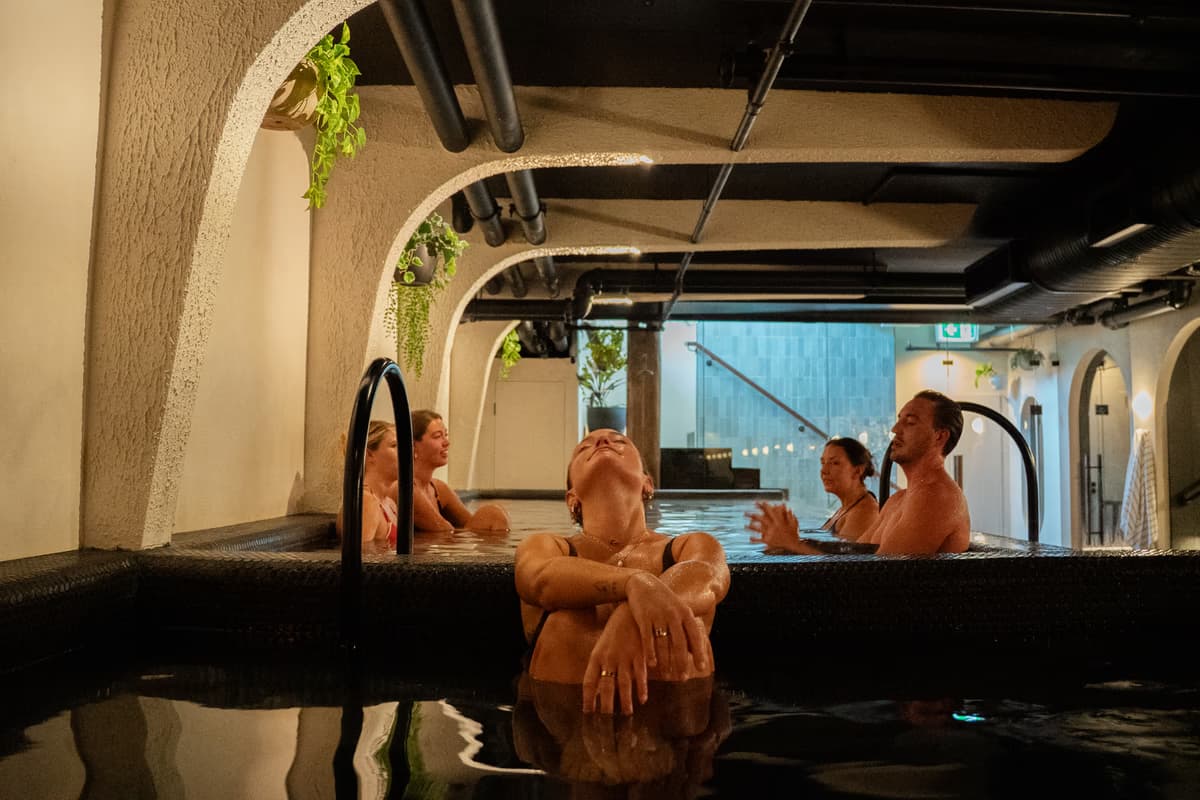

Ask what temperature a sauna should be and you'll get a different answer in every country. Too cool and the body never quite commits. Too hot and it braces instead of opening. Somewhere between 80 and 90 degrees, the room finds its honest register: warm enough to work, gentle enough to stay.
We hold ours at 85. It's a deliberate number. At that heat the surface of the skin warms first, then the blood beneath it, and the vessels widen to carry that warmth outward. The pulse lifts as though you'd taken a slow walk uphill. Nothing is forced. The body is simply doing what heat asks of it.
What the heat is actually doing
Give it fifteen minutes and the change turns physical. Shoulders drop. Breath lengthens. The jaw, which holds more of the day than we tend to notice, lets go. This is the sauna's real work: not to punish, but to coax the body out of the positions it has been holding since morning.
Eighty-five degrees isn't a limit to push against. It's a temperature you can stay inside.
The number matters less than the steadiness of it. A sauna that swings from scorching to cool never lets the body settle; it keeps flinching. Held at 85, the heat becomes a place you can rest inside rather than endure, and warm enough that when you finally step out to the plunge, the cold has something to answer.
Ours holds the answer daily: the 80–90° sauna at Byron Bay, with the cold waiting across the room.