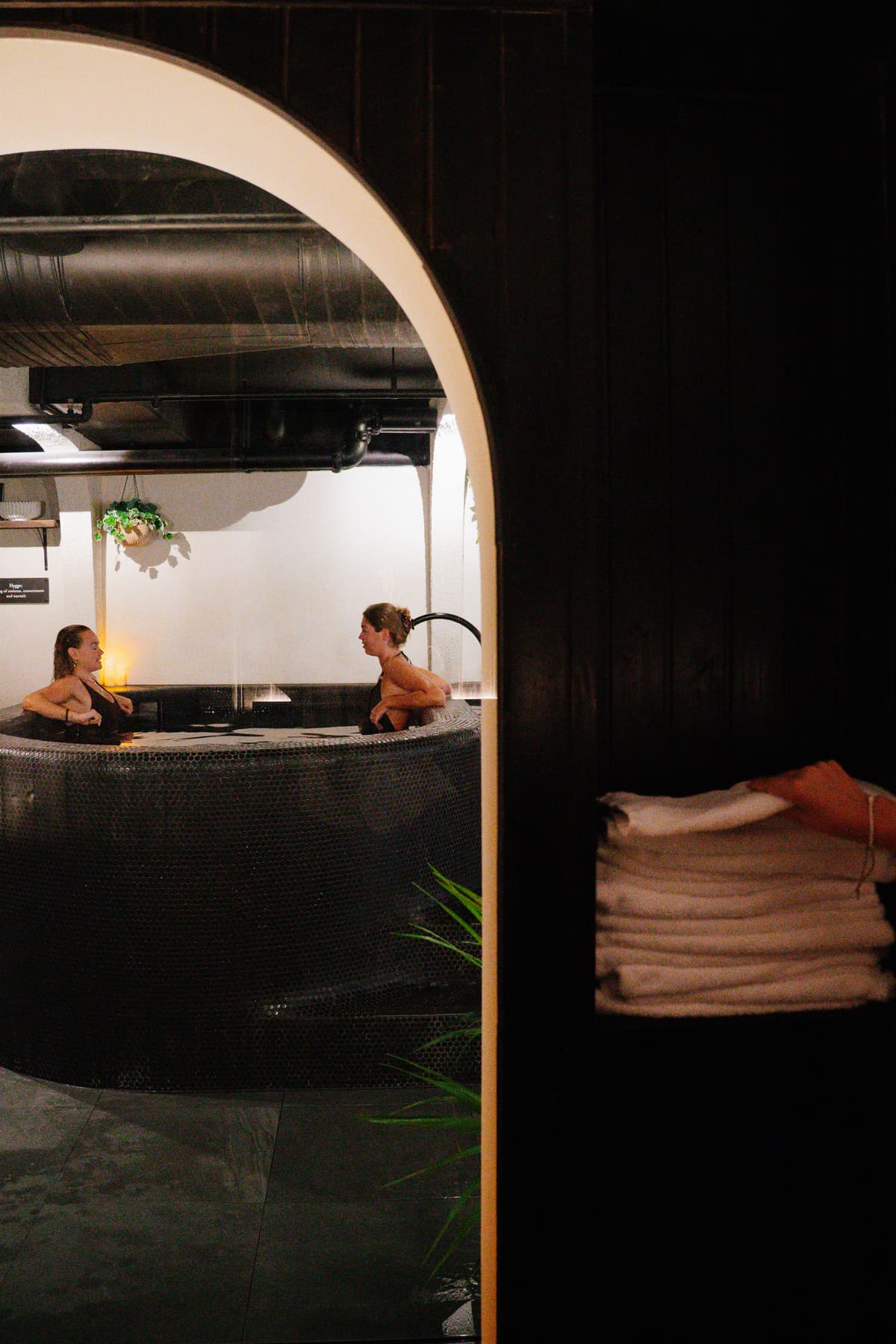
The sauna does the talking first. Fifteen, twenty minutes at 85 degrees and the body starts its quiet negotiations: vessels widening, pulse lifting, the day's tension surfacing through the skin. It feels like the main event. It isn't. It's the setup.
The plunge isn't a test of nerve. It's the second half of a sentence the sauna started.
Step into the plunge and everything the heat opened begins to close. Blood that gathered at the skin is sent back to the core. The nervous system, a moment ago fully occupied, goes quiet. Two breaths of protest, then a stillness that is hard to find anywhere else.
Order matters. Heat first teaches the body to let go; cold second teaches it to settle. Reverse it and you're simply cold, then warm. Pleasant, but not the mechanism. Finish on the second plunge. Then do nothing for a while. That part isn't optional.
Older than the trend
None of this is new. Long before anyone called it contrast therapy, the pattern was simply how people lived close to heat and cold. Natural hot springs, smoke saunas, cold rivers and snow were used for washing, for recovery, for gathering, and in the hardest climates, for staying alive through a long winter.
In Finland and the regions around it, sauna followed by cold water or snow settled into ordinary life more than two thousand years ago: built beside lakes and homes, used weekly and sometimes daily, a place to bathe, to heal, to give birth, to be together. In Finland today, there are more than 3 million saunas for a population of around 5.5 million people. The order we're careful about isn't a trend someone invented. It's a mechanism people have trusted for a very long time.
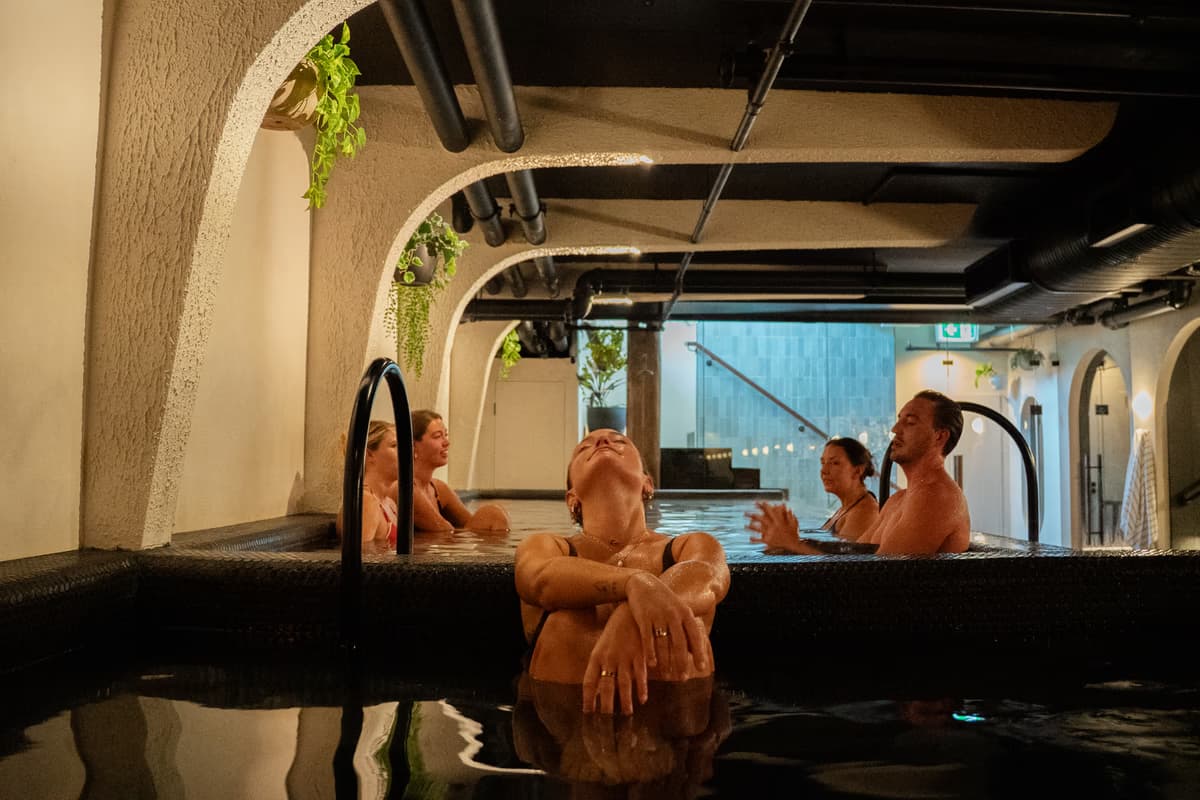
If you'd rather feel the mechanism than read about it, the contrast circuit at Byron Bay runs three heats and two colds, in the right order, for two hours at a time.