
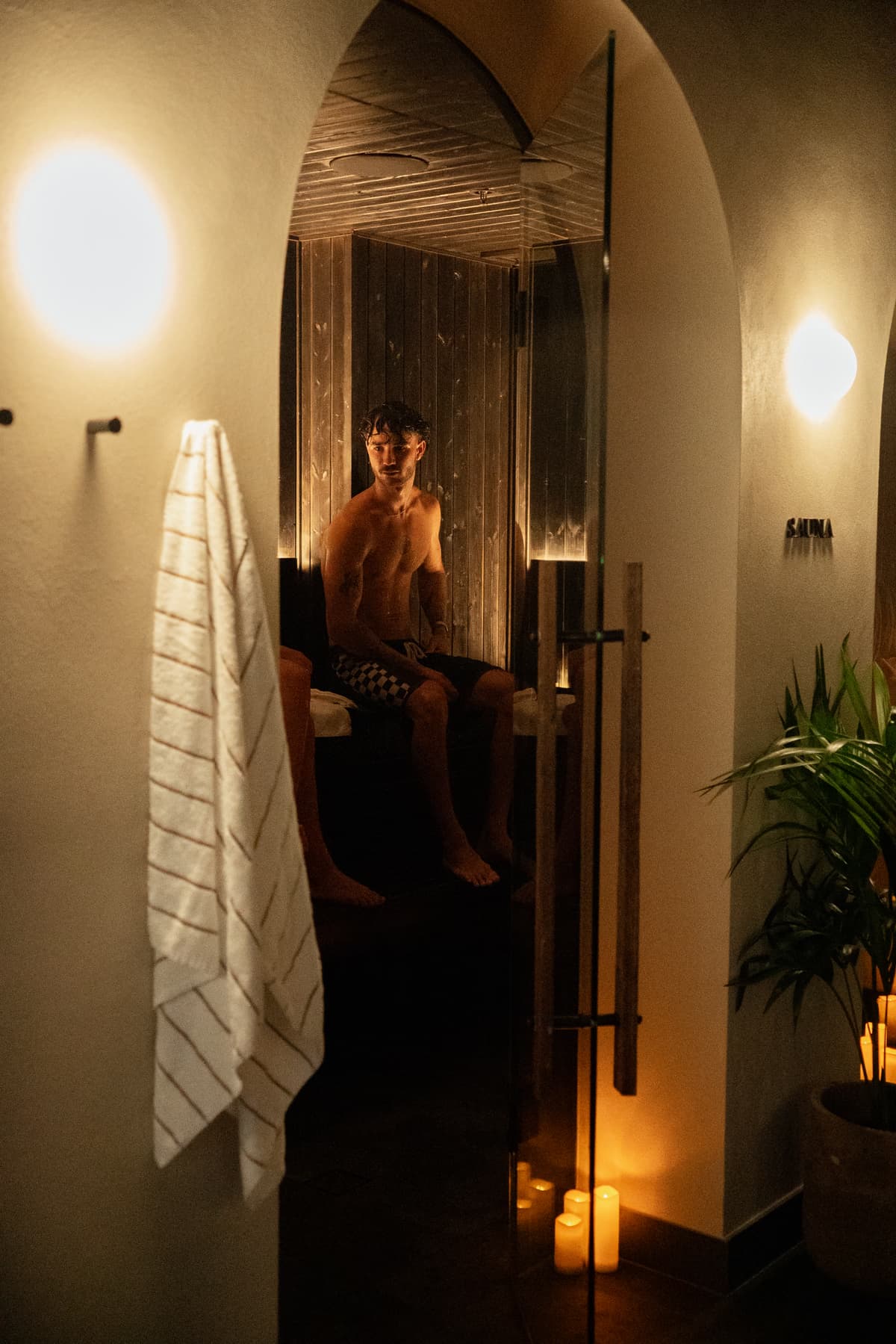
In a hyperconnected world, the sauna offers something increasingly rare: a place where the mind is allowed to rest. People step in braced and step out, in their own words, clearer, lighter, grounded. It's worth asking what's actually happening in there, because a good deal of it is measurable.
The neuroscience of a quiet mind
The controlled heat of a sauna is a stressor the body can meet safely, and it answers by releasing endorphins, the natural opioids sometimes called the body's own morphine. Research published in the Journal of Human Kinetics has found that regular sauna sessions can raise endorphin levels, which accounts for a good part of that settled, faintly glowing calm people describe afterwards.
Regular practice also helps regulate cortisol, the body's main stress hormone. Finnish research tracking sauna users across 25 years has recorded lower cortisol in those with a consistent habit: a sign that the heat, over time, gently retunes the stress response rather than merely interrupting it for an afternoon.
From fight-or-flight to rest-and-restore
Much of modern life keeps the nervous system in a low hum of fight-or-flight: alert, braced, running on stress hormones. The sauna does something unusual with that. On the far side of the heat, the parasympathetic nervous system, the rest-and-digest state, takes over. Heart rate eases, breathing slows, and the body reads the warmth as a signal that it's finally safe to stand down.
There's a meditative quality to it, too. In the enveloping warmth there's nothing to do and nowhere to be, and the mind tends to follow the body's lead. Racing thoughts lose their urgency; the mental chatter thins out. It's less a discipline you impose than a by-product the heat hands you.
What the long studies show
The longer research is more striking still, and it needs reading carefully. A Finnish cohort study that followed more than 2,000 men over 25 years found that those who used a sauna four to seven times a week had a markedly lower risk, around 77 percent lower, of developing a psychotic disorder than those who went once a week. The finding is specific: it concerns serious psychiatric illness, not everyday stress or low mood, and a correlation in a cohort is not proof of cause. The researchers pointed to a cluster of plausible reasons behind it:
- Better sleep quality
- Greater social connection
- Regular regulation of stress hormones
The contrast advantage
Pair the heat with a cold plunge and the effect sharpens. Moving between hot and cold is a dose of stress you choose and then release, and the body learns from the practice:
- Steadier stress resilience, built through controlled exposure to a stressor that's good for you
- A quiet sense of self-efficacy that comes from meeting something genuinely hard
- A sharpened attention to the present moment, which leaves little room for anxiety
The company in the room
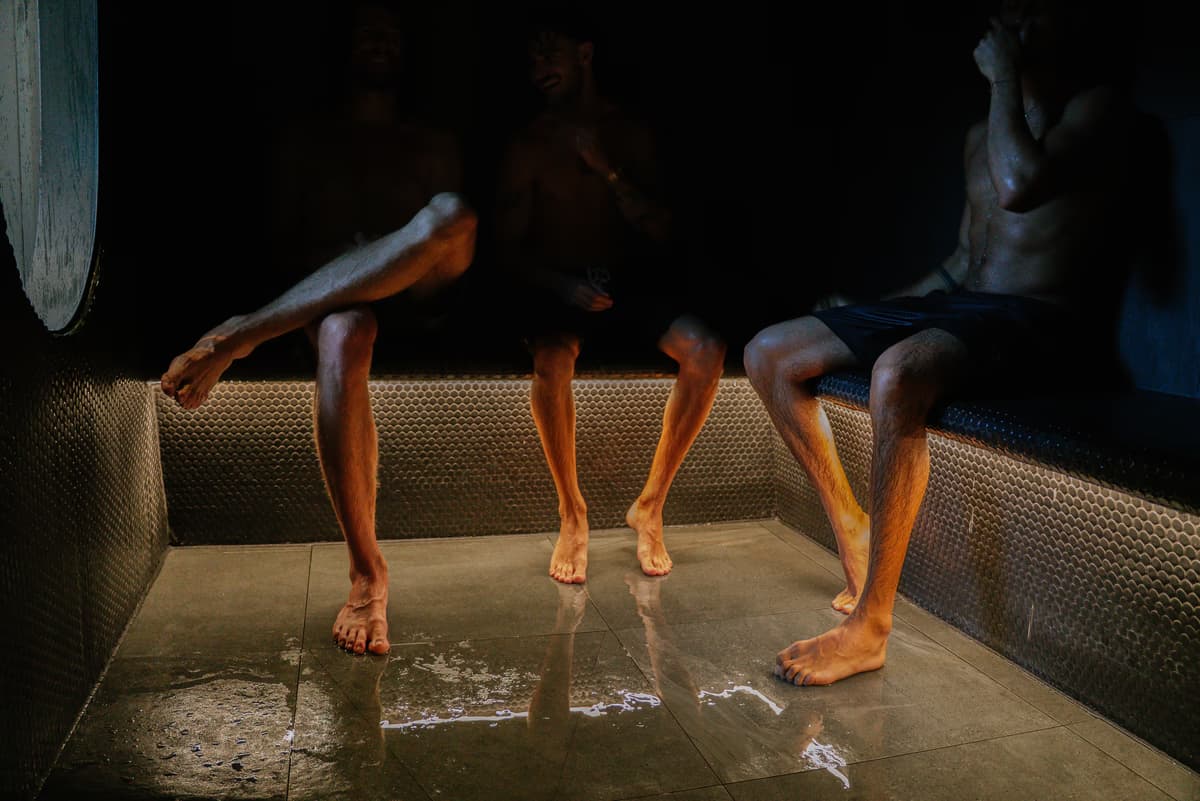
Traditional Scandinavian sauna culture understood something psychology is only now catching up to: mental wellbeing tends to flourish in company. Away from screens and notifications, a shared bench is oddly good at loosening real conversation, and the social bonds that follow are themselves protective for the mind.
There's a quieter kind of medicine in sharing a hard moment, too, the bite of the heat or the shock of the plunge, alongside other people. It builds resilience and takes the edge off the isolation that so often travels with a struggling mind. The ceremony helps as well: a standing sauna gives the week what psychologists call a temporal landmark, a fixed point that lends shape and steadiness to uncertain stretches.
Evidence you can feel
None of this is folklore. Finland, where the sauna is woven into ordinary healthcare and daily life, has decades of research behind it, and the countries with the deepest sauna traditions tend to sit near the top of the world's happiness rankings. Make of that correlation what you will; the mechanism underneath is real enough. Twenty to thirty minutes of heat can change, a little, how the brain meets stress.
As Arna, a member since before the doors opened, describes it: “I always leave feeling clear in my mind and grounded in my body.” Less a treat than maintenance, quietly done, using one of the oldest practices we have.
That maintenance is bookable: heat and cold, back to back, in Byron Bay: two hours, with no schedule inside them.