Navia began a long way from Byron Bay, in the cold. In early 2024, Patrick and I travelled through Scandinavia and fell for its sauna and cold-plunge culture. What moved us was not the facilities so much as the ritual around them: a way of moving between heat and cold that was woven into ordinary life, unhurried and shared. We came home with the beginnings of a plan we had not quite meant to make.
Two saunas in particular stayed with us. At Salt in Oslo, a striking A-shaped timber room let the heat climb with every ascending tier, so you could choose your own intensity within a single space. At Pust in Tromsø, we lowered ourselves into the frozen Arctic Ocean while snow fell around us and the mountains sat white behind. It was exhilarating and strangely restorative, and by the time we flew back to Australia we knew roughly what we wanted to build.
Translating the idea
Byron is not the Arctic, and we never pretended otherwise. Those saunas all overlooked something extraordinary, and a room below a busy town centre could not borrow that view. So we chased the feeling instead, and gave the space its own thing to look at: bathers rising to the challenge of the cold plunge, and water slipping over the infinity edge of the magnesium hot pool. A traditional Finnish sauna, a proper contrast between hot and cold, and a sense of calm that did not depend on scenery.
For the early concept we worked with Leo Terrando, a Byron local with more than twenty years designing refined, considered interiors. He is known for bespoke spaces that quietly bend the usual rules, and his eye helped settle the idea into something both buildable and beautiful, every detail meant to make you pause rather than perform.
Breaking ground
Construction began in November 2024. Within weeks the bones of the bathhouse appeared: the wall skeleton went up, and the concrete stairs and pool shell were poured, laying down the descent that takes you below the street and out of the noise. Watching the raw shape emerge was the first time the whole thing felt real rather than imagined.
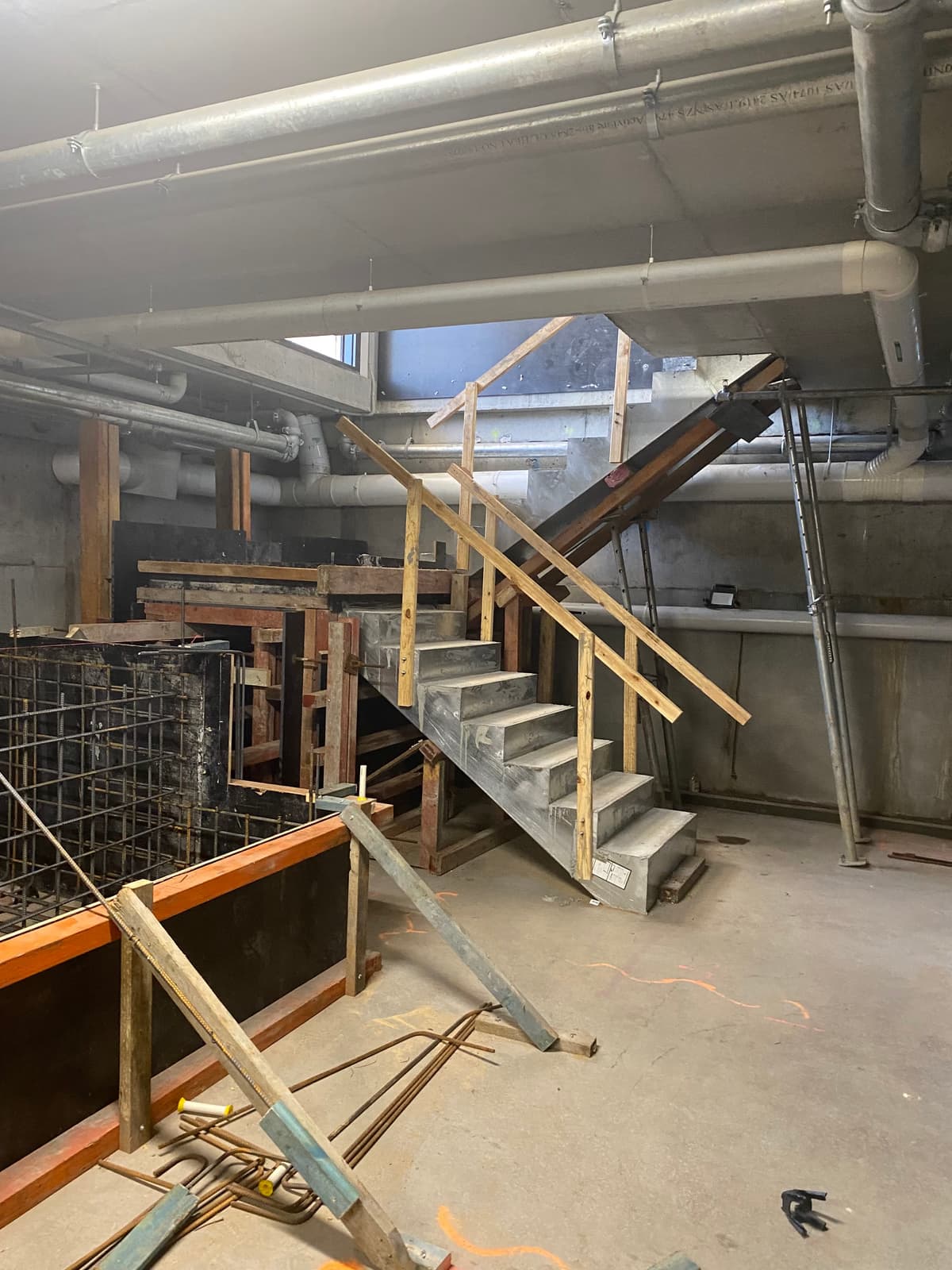
From there the space grew into its organic forms: arched walkways, curved walls, the steel framing that would become the sauna arches over the cold plunge and the magnesium pool. We wanted flow rather than corners, a room that eased you along instead of directing you.
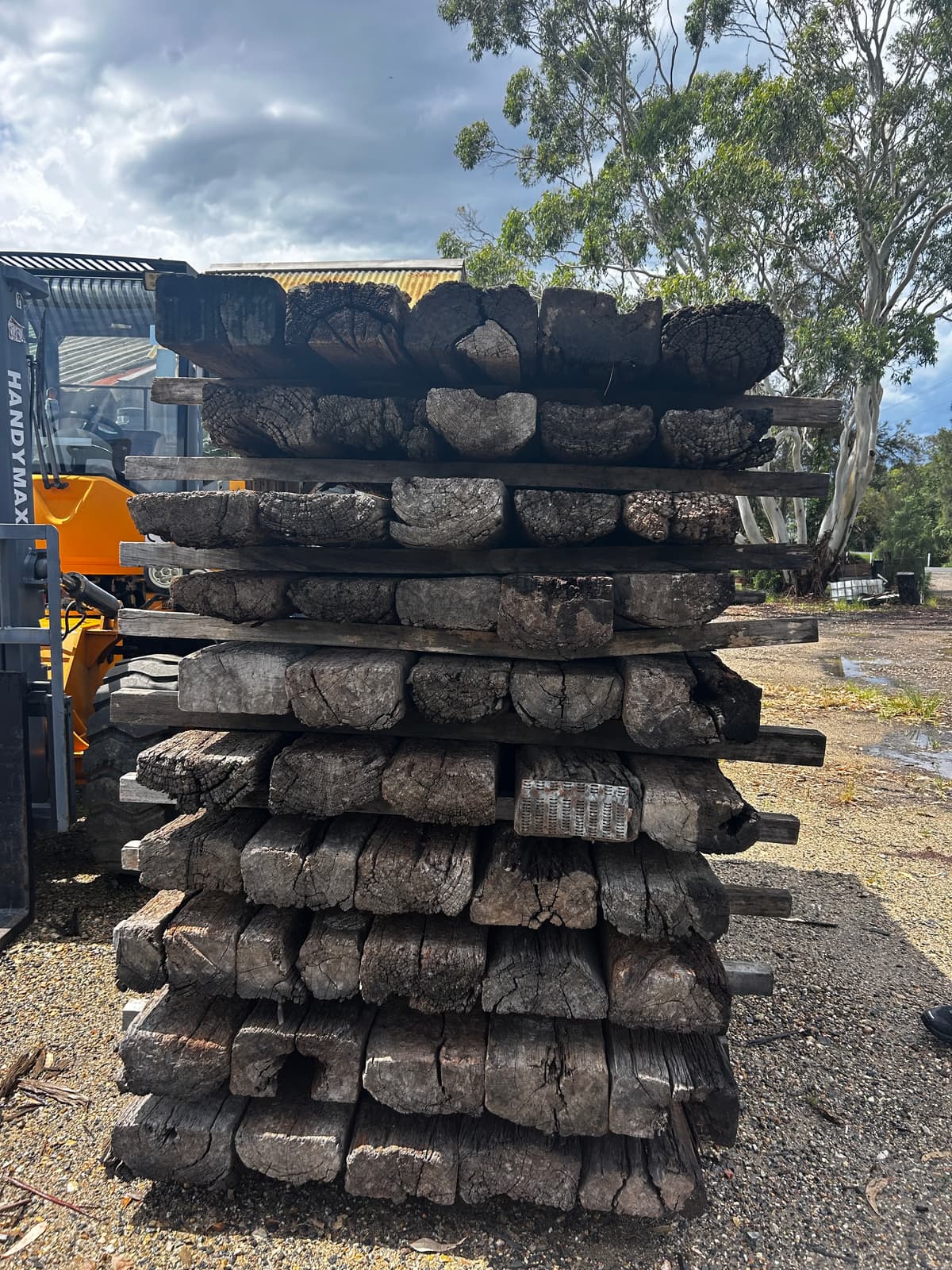
Natural materials carried that intent. Reclaimed timber is central to Scandinavian sauna design, so we partnered with Solid Grain Timbers, a Byron supplier specialising in reused wood, and let its character and history run through the space. Against the timber we set our signature stone: a marble of deep blacks, rich blues and soft whites, chosen for the reception desk and the change-room vanity, with simple custom lockers to match, functional but worth a second look.
Some of that work was hands-on in the most literal way. Pat took to the door jambs himself, wire-brushing every length of timber to lift the grain and bring out its texture and depth. A small thing, easy to miss, and exactly the kind of detail the whole place is made of.
The fit-out
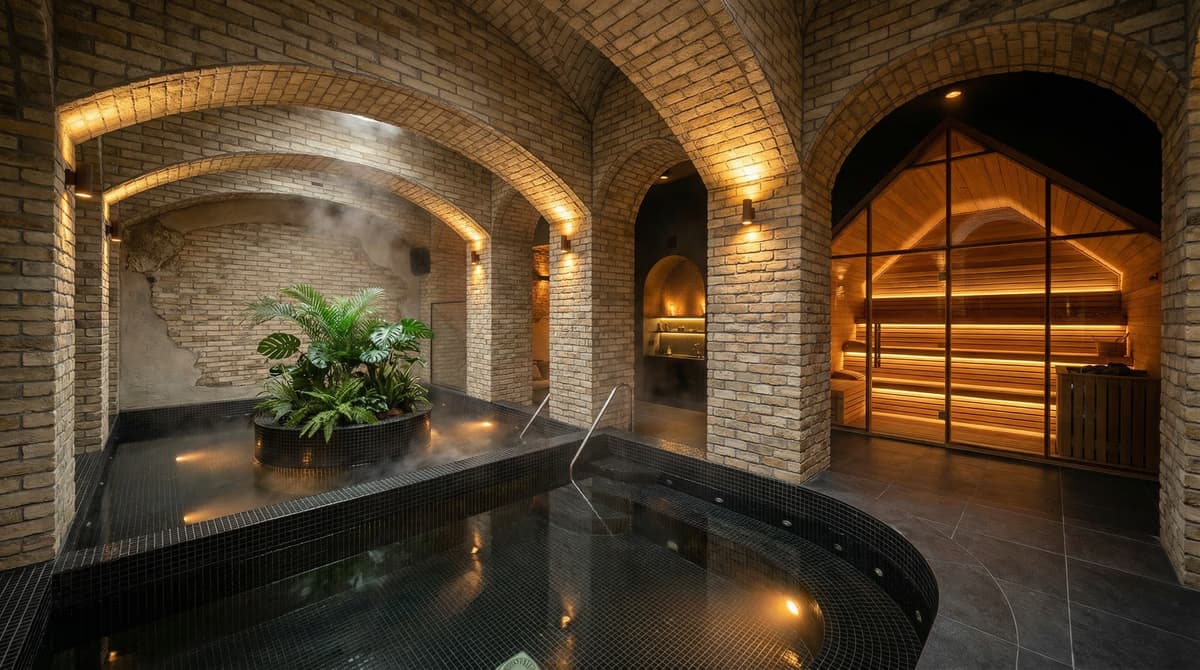
Then the surfaces went in, and the rooms started to feel like themselves. For the magnesium hot pool we chose black pebble tiles with black grout, so the water reads deep and still, like a rock pool along the coast, with a texture underfoot you notice the moment you step in. The steam room seating took the same black pebble tile, curved along its edge to sit into rather than perch on.
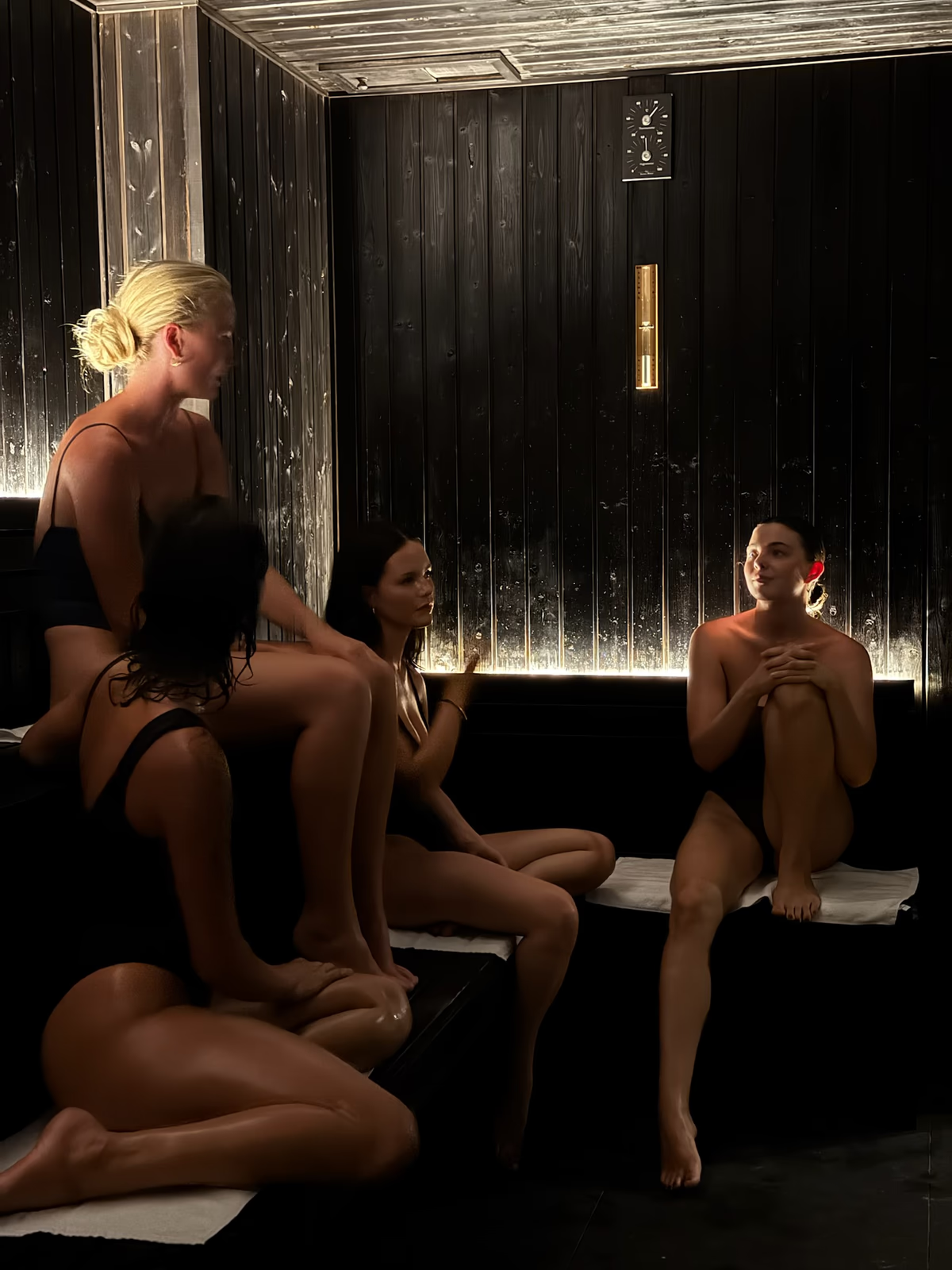
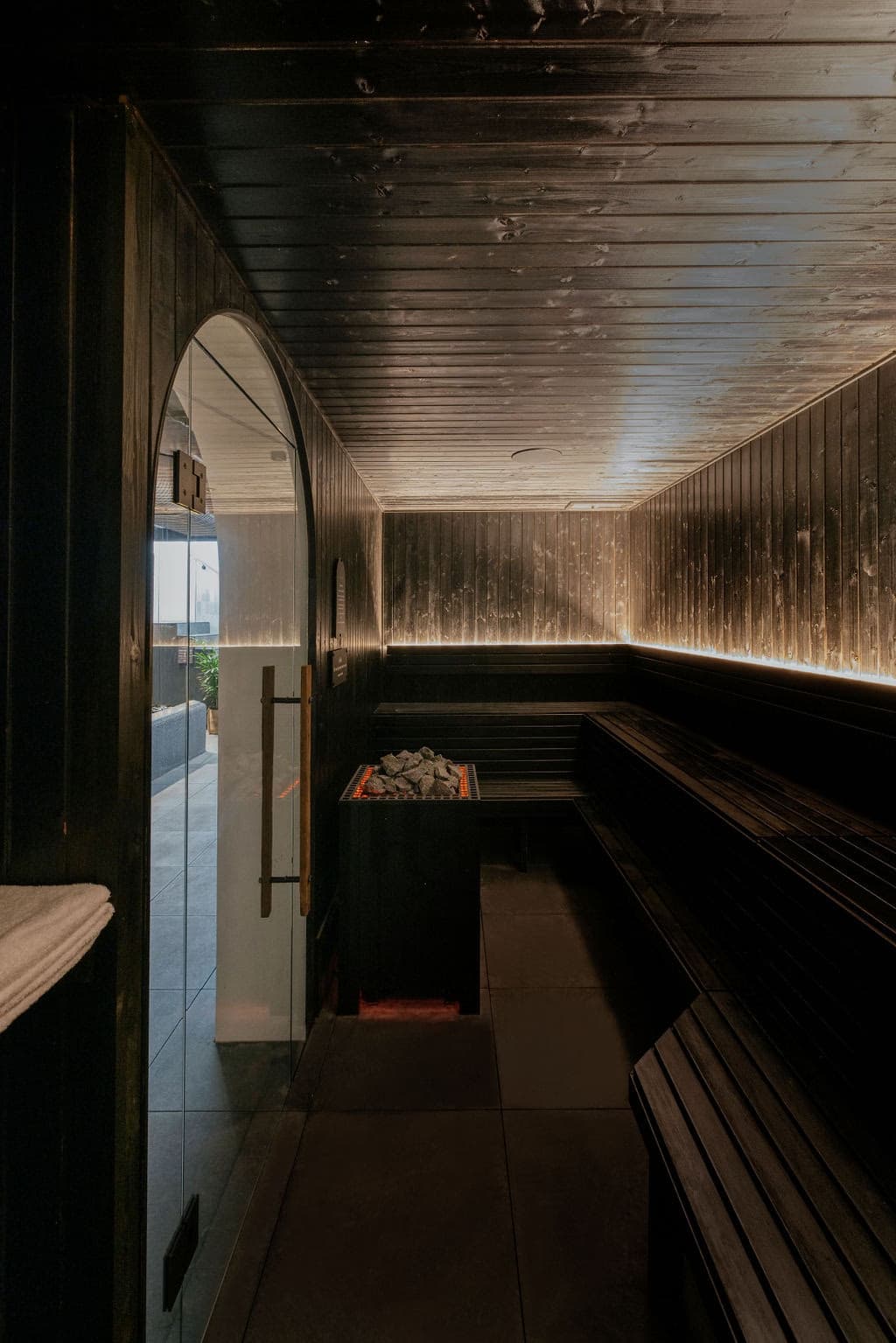
The traditional Finnish hot-rock sauna was clad in black timber, drawing directly on Löyly in Helsinki, a community sauna that shaped much of how we think about the space. Dark timber makes a room feel intimate and cocoon-like; it lets the heat radiate and settles you the moment you sit down. In the bathrooms we tiled in variegated blue, chosen to catch the light differently tile by tile and evoke the movement of water.
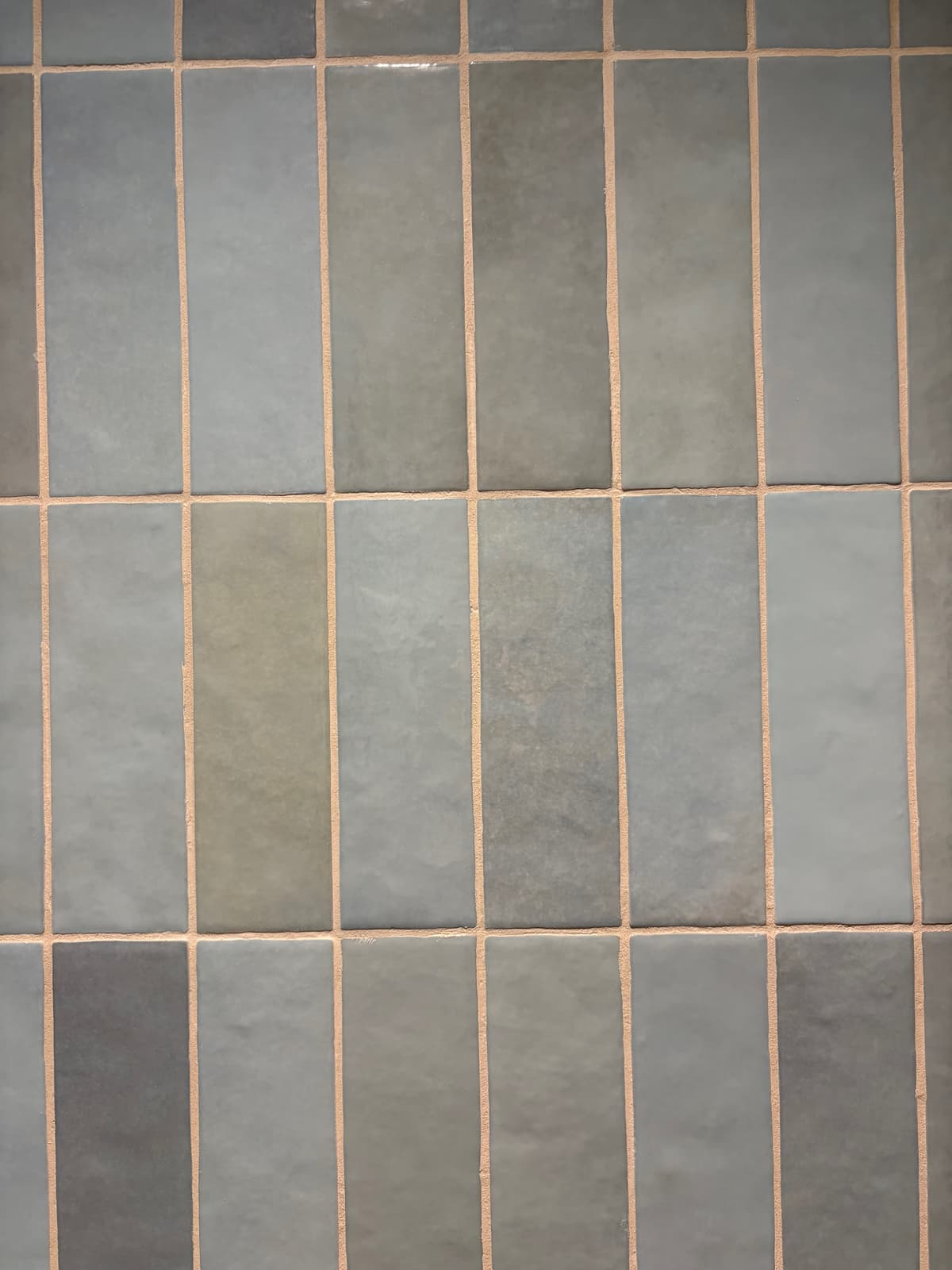
Every piece was chosen to enhance the senses while staying close to the natural elements that first inspired the trip.
Finishing touches
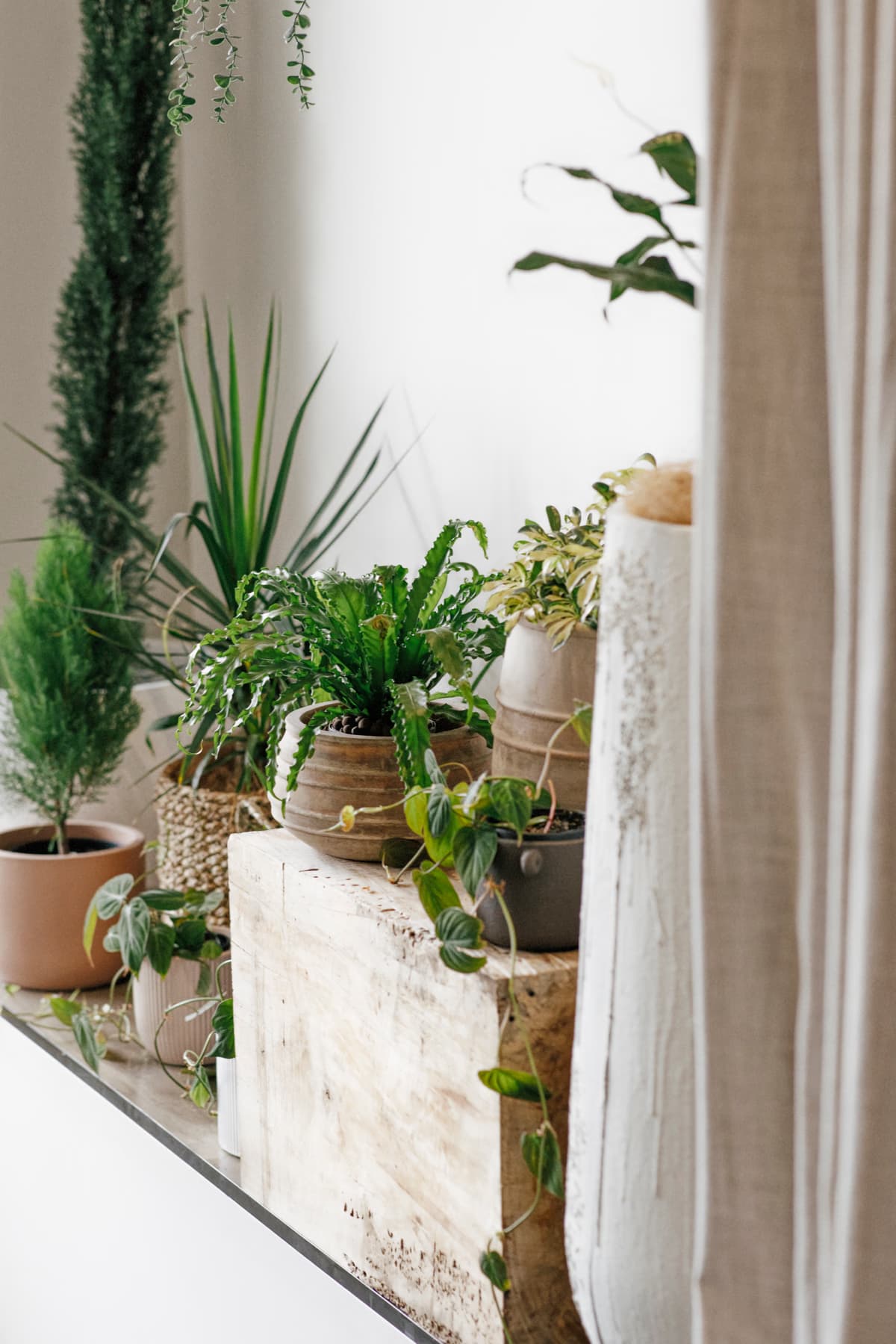
The last stretch was all detail. We planted greenery throughout, thriving and lush, a quiet reminder to slow down and breathe. We had timber seats custom-made for that grounded Scandi warmth, the kind that says you are home the moment you sit. The lighting was kept low and candle-scale, indirect and soft, so that as the sun set the bathhouse turned into something cocooning rather than lit.
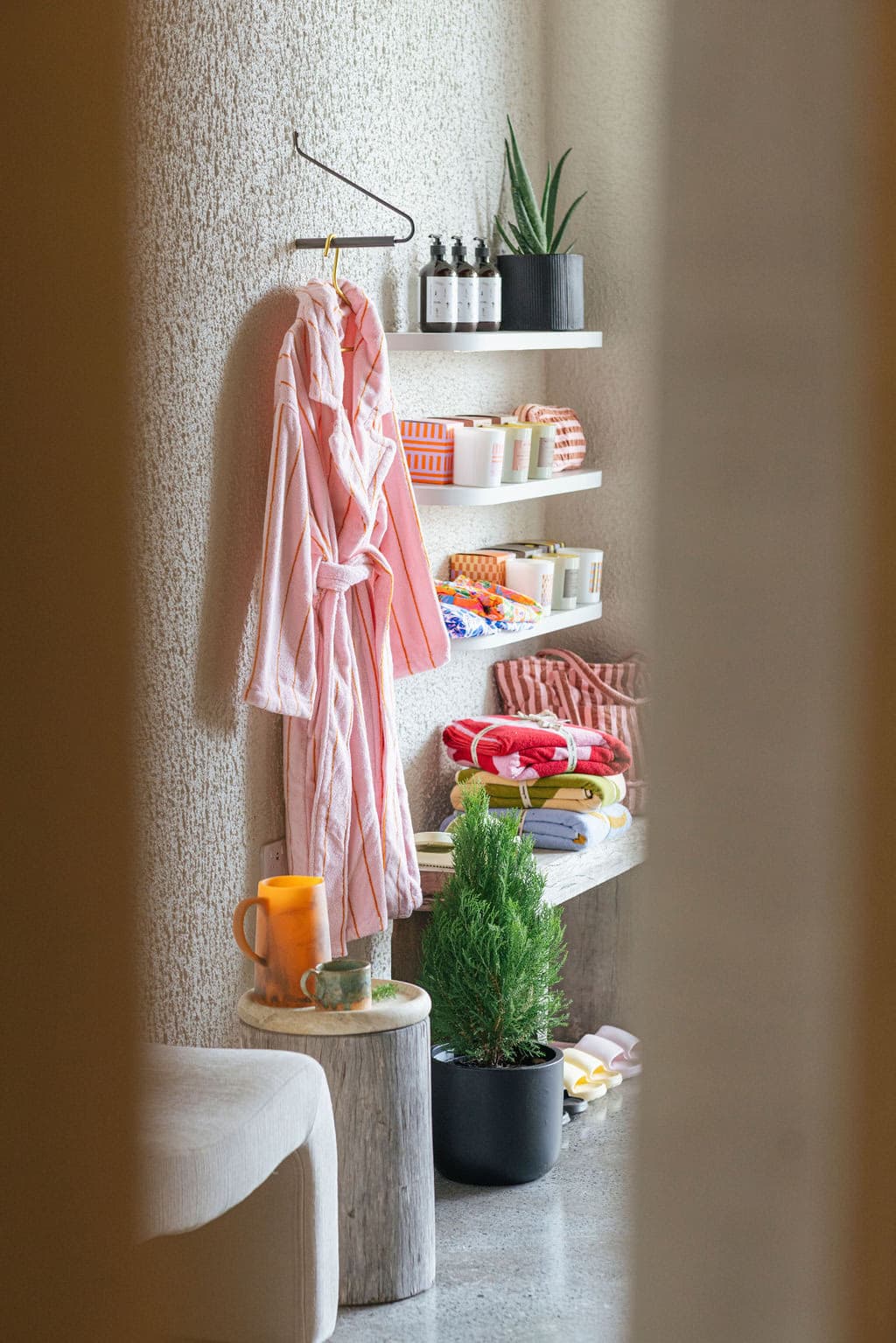
We also curated a small retail edit we are genuinely proud of: beautiful, ethically made pieces from female-owned brands whose values line up with ours, among them Homey, Celia Loves, Mosey Me, Kulani Kinis and Commonfolk. Each was chosen to let you carry a little of the feeling home.
And then, in April 2025, the steam room, sauna, cold plunge, ice plunge and magnesium pool were filled, warm and cool and everything between, and the first bathers came down the stairs. What began as a feeling in a Norwegian winter had become a room below Jonson Street, running on its own slow clock. It is open now, and it has been ever since.